


Simplifying upgrade at Twilio
Simplifying upgrade at Twilio
Drove the vision and design for upgrade experience.
Simpler, faster, and compliant across the globe.
Drove the vision and design for upgrade experience. Simpler, faster, and compliant across the globe.
Interested, but stuck
Interested, but stuck
Only a small fraction of customers upgrade. That's the moment an account goes from trial to pay as you go, fueling self serve revenue, a priority at a public company.
I partnered with research, product, legal, and engineering to uncover why customers abandoned the journey, across 5 markets: US, Canada, Europe, UK, and Japan.
Only a small fraction of customers upgrade. That's the moment an account goes from trial to pay as you go, fueling self serve revenue, a priority at a public company.
I partnered with research, product, legal, and engineering to uncover why customers abandoned the journey, across 5 markets: US, Canada, Europe, UK, and Japan.
Why customers stopped
Why customers stopped
To understand the flow, I mapped all 16 screens, worked with PMs and compliance on why each step existed, and drew on earlier research into why customers dropped:
To understand the flow, I mapped all 16 screens, worked with PMs and compliance on why each step existed, and drew on earlier research into why customers dropped:
Create customer profile
13/16 screens
Tax information
1/16 screens
Payment
1/16 screens
Starting balance
1/16 screens
Too many steps
Too many steps
At 16 screens, upgrade felt like a process, not a quick task, especially for customers used to fast, instant upgrades with other services.
At 16 screens, upgrade felt like a process, not a quick task, especially for customers used to fast, instant upgrades with other services.
Verification at the first step
Verification at the first step
The first step asked for a government ID and a live photo. Required by telecom rules, but customers couldn't see why it was required upfront, and it drove the biggest drop off. In some countries it was a dead stop: a day's wait for verification before they could continue.
The first step asked for a government ID and a live photo. Required by telecom rules, but customers couldn't see why it was required upfront, and it drove the biggest drop off. In some countries it was a dead stop: a day's wait for verification before they could continue.
Card details before pricing
Card details before pricing
Customers had to enter their card before choosing a starting balance. Every other transaction shows the price first, then asks for payment.
Customers had to enter their card before choosing a starting balance. Every other transaction shows the price first, then asks for payment.
Only what upgrade needs
Only what upgrade needs
Majority of the flow was about compliance. To simplify upgrade, we had to rethink the compliance behind it:
Majority of the flow was about compliance. To simplify upgrade, we had to rethink the compliance behind it:
The long route
The long route
The compliance flow ran through Persona's embedded widget, which walks customers through verification one piece at a time. Changing the flow meant changing how we used Persona.
The compliance flow ran through Persona's embedded widget, which walks customers through verification one piece at a time. Changing the flow meant changing how we used Persona.
What’s required for upgrade
What’s required for upgrade
We asked what Twilio actually needs before it can take on a customer. In telecom, the government strictly limits who a company can do business with, so the one real requirement is confirming a customer isn't sanctioned.
We asked what Twilio actually needs before it can take on a customer. In telecom, the government strictly limits who a company can do business with, so the one real requirement is confirming a customer isn't sanctioned.
The rest can wait
The rest can wait
The sanctions check needs only a name and address. Everything else was compliance for using Twilio later, so we moved it into the existing post-upgrade registration flows.
The sanctions check needs only a name and address. Everything else was compliance for using Twilio later, so we moved it into the existing post-upgrade registration flows.
No early stops
No early stops
Calling Persona's API instead of the widget gave us control over the flow. Before, a flagged customer was stopped at step 1, now they continue through balance and payment, and only the ~2% flagged are paused for more detail.
Calling Persona's API instead of the widget gave us control over the flow. Before, a flagged customer was stopped at step 1, now they continue through balance and payment, and only the ~2% flagged are paused for more detail.
Regular
Sanctioned
Regular
Sanctioned
Making payment make sense
Making payment make sense
Asking for a card before the customer had chosen a starting balance felt backwards. I worked with product and engineering to find out why, and whether we could flip it.
Asking for a card before the customer had chosen a starting balance felt backwards. I worked with product and engineering to find out why, and whether we could flip it.
Why was it that way
Why was it that way
The balance step's currency and auto-recharge/low balance options came from the card's issuing country, so the card had to come first.
Having designed autopay before, I knew how sharply auto-recharge rules vary by country.
The balance step's currency and auto-recharge/low balance options came from the card's issuing country, so the card had to come first.
Having designed autopay before, I knew how sharply auto-recharge rules vary by country.
Two checks, one answer
Two checks, one answer
We read the country twice, from the address and the card, to avoid payment and auto-recharge setting errors. So engineering used the country from step 1 to set the balance options and moved the payment to the last step.
We read the country twice, from the address and the card, to avoid payment and auto-recharge setting errors. So engineering used the country from step 1 to set the balance options and moved the payment to the last step.
A safe bet
A safe bet
Engineering flagged one risk in dropping the card check, a country that allows auto-recharge but a card that doesn't. Data put it at about 0.2% of customers, a safe trade for a cleaner flow.
Engineering flagged one risk in dropping the card check, a country that allows auto-recharge but a card that doesn't. Data put it at about 0.2% of customers, a safe trade for a cleaner flow.
Right tax, reduced refunds
Right tax, reduced refunds
While working with the tax team, we found that customers who skipped the optional tax ID got charged tax and then filed refund tickets. Making it mandatory would cut tickets but may slow the upgrade.
Our hypothesis: with the field now on the first screen instead of the 14th, more should fill it without being forced.
While working with the tax team, we found that customers who skipped the optional tax ID got charged tax and then filed refund tickets. Making it mandatory would cut tickets but may slow the upgrade.
Our hypothesis: with the field now on the first screen instead of the 14th, more should fill it without being forced.
Effortless. Fast. Lean.
Effortless. Fast. Lean.
From 16 screens to 3, across 5 markets.
From 16 screens to 3, across 5 markets.
Regular customer
Sanctioned customer
Regular
Sanctioned
Localised tax ID and currencies for Canada, The UK, Europe, and Japan.
Localised tax ID and currencies for Canada, The UK, Europe, and Japan.


Just getting started
Just getting started
The new flow was a foundation, not the end. We lined up more improvements:
Improve speed: Work with sign-up and onboarding to reuse what customers already gave us, cutting inputs in upgrade even further.
Reduce tax refunds: Experiment with an incentive to add tax IDs, easing the tax team's load and reducing refunds.
Settle data ownership: The upgrade data sits with the trial and onboarding team, who barely use it, while commerce needs it for billing and compliance for registration. Settling who owns and shares it would ease cross-team work.
The new flow was a foundation, not the end. We lined up more improvements:
Improve speed: Work with sign-up and onboarding to reuse what customers already gave us, cutting inputs in upgrade even further.
Reduce tax refunds: Experiment with an incentive to add tax IDs, easing the tax team's load and reducing refunds.
Settle data ownership: The upgrade data sits with the trial and onboarding team, who barely use it, while commerce needs it for billing and compliance for registration. Settling who owns and shares it would ease cross-team work.


Building trust with savings
Building trust with savings
Led design for lifetime savings with Subscribe & Save. Implemented in India and USA, increasing retention by 23%.
Led design for lifetime savings with Subscribe & Save. Implemented in India and USA, increasing retention by 23%.

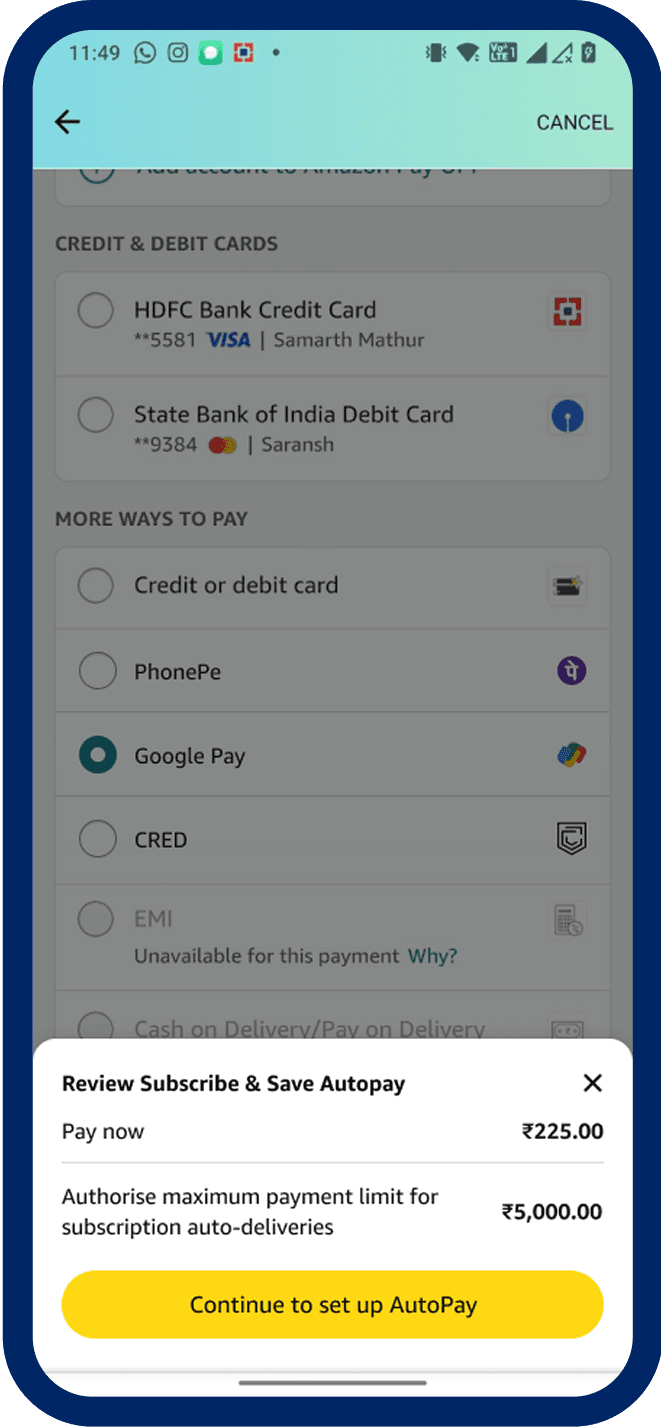

Improving the new way to Autopay
Improving the new way to Autopay
Led design to improve UPI Autopay set up experience, Increasing success rate by 32%.
Led design to improve UPI Autopay set up experience, Increasing success rate by 32%.


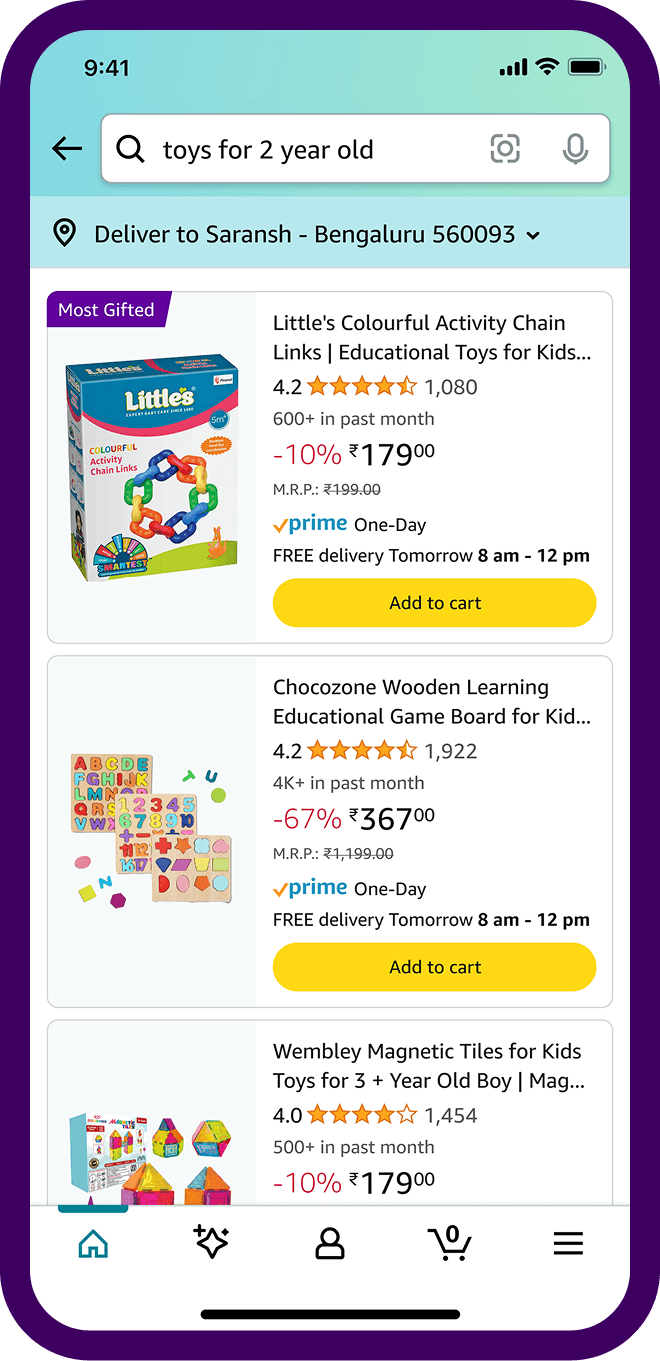
A new way to find gifts. Faster.
A new way to find gifts. Faster.
Designed a new way to identify the best gifts on Amazon. Easy, efficient and implemented in 6 other countries.
Designed a new way to identify the best gifts on Amazon. Easy, efficient and implemented in 6 other countries.